Stop guessing. Quote with confidence.
Free, open calculators that account for every hidden cost in 3D printing and UV printing, so you never sell at a loss.
FDM 3D Printing Calculator
Calculate the true cost of every FDM print — filament, electricity, machine depreciation, labour, and fulfilment — in one shot.
UV Direct-to-Object Printing
Estimate UV flatbed and roll-to-roll print costs including ink coverage, substrate, specialised labour, and machine wear.
Latest Updates & Tips
Guides, hardware news, and pricing insights
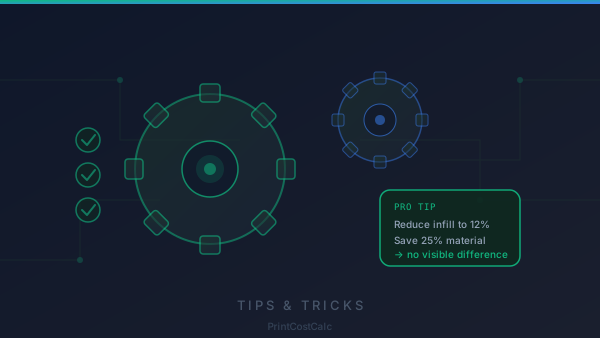
Dialing In Your First Layer: The Cheapest Fix in 3D Printing
More failed prints start on layer one than any other layer. A correctly calibrated first layer costs nothing extra and saves every gram of filament in the prints that would have failed.
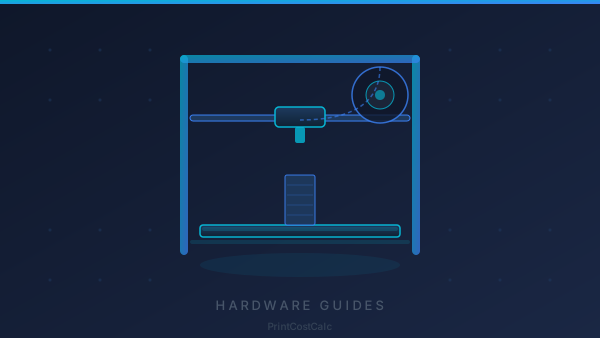
UV DTF vs Direct-to-Object Printing: Which Actually Costs Less?
Both methods put UV ink on products, but the economics are completely different. Here is how to calculate cost-per-unit for each before you invest in hardware.
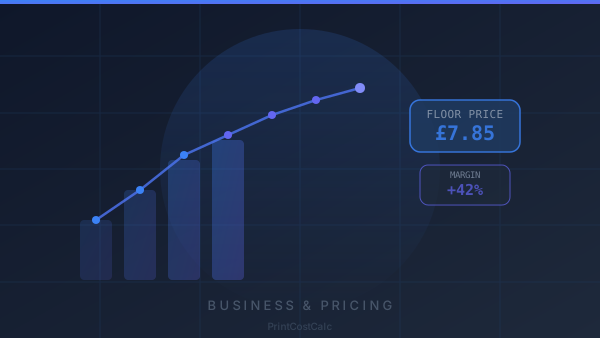
The True Cost of 3D Printing: What Your Quote Is Missing
Filament price is the tip of the iceberg. Electricity, machine depreciation, labour, and failure rate all eat into your margin — and most sellers ignore at least two of them.
Slicer Settings That Reduce Cost Without Reducing Quality
Infill percentage, layer height, and wall count all have direct cost implications. Most prints can be made 20–30 % cheaper by adjusting three settings — without any visible quality difference on the finished part.
Support Structures Explained: When to Use Them and How to Minimise Cost
Supports add material, print time, and post-processing labour to every print they touch. Understanding when they are genuinely necessary — and when design changes avoid them entirely — directly reduces your cost per print.
Setting Up a Small Print Farm: Costs You Must Plan For
Scaling from one printer to five looks simple on a spreadsheet. Labour, power, and quality control costs behave differently at scale — here is what to model before you buy machine number two.
How to Reduce Failed Prints and Stop Wasting Filament
A 10 % failure rate on a busy machine wastes kilograms of filament per month. Most failures are preventable with the same four checks done consistently before every print.
Bambu Lab X1C vs Prusa MK4: A Cost-Per-Print Comparison
The X1C is faster. The MK4 has a longer lifespan estimate and lower purchase price. Which one actually costs less per print depends on your volume and workflow.
PLA vs PETG vs ABS: Filament Cost vs Use Case
Filament choice affects material cost, electricity cost, and failure rate simultaneously. Here is how to match material to application — and what each choice costs you per kilogram at the printer.
Choosing Your First 3D Printer: What the Spec Sheet Does Not Tell You
Build volume and print speed dominate the marketing. What matters more for day-to-day use is bed levelling, ecosystem, and how the manufacturer handles firmware bugs.
How to Price 3D Prints on Etsy and Online Marketplaces
Undercutting on price is tempting but dangerous. Here is a repeatable method for calculating a floor price — and how to position above it without losing sales.
Free account — no credit card
Supercharge Your Quoting Workflow
Save your settings, presets, and quotes across sessions. Every tool you open starts with your costs already loaded.
- Filament Costs
Save custom material presets so every quote starts with your real prices.
- Hardware & Inserts
Store your most-used bolts, inserts, and hardware — reuse across projects instantly.
- Blank Objects for UV Printing
Keep your blank substrate catalogue on-hand for fast UV job estimation.
- Electricity Rates
Set your local kWh rate once and let every calculator pull it automatically.